Saturday, 30 May 2020

The Buff. A buffered multiple for Eurorack

During my brief journey down the rabbit hole that is Eurorack (from which I bailed; too expensive, too fiddly, too complex for me) I toyed with the idea of designing and manufacturing modules. A buffered multiple is a simple utility module and the design I chose to explore the process of bringing a product to market.

At the time Eurorack was the very embodiment of DIY that still had a 'cottage industry' vibe to it. I decided Eurorack wasn't for me but sold a few handmade modules on eBay all fabricated in my own maker space including CNC milled acrylic panels and hand-etched circuit boards.


The stripboard Roland TR808

Way back at the beginning of the last decade, based on some work by Eric Archer (designer of the much respected Grendel Drone Commander, now Rare Waves LLC), Electro-music.com forum contributor -minus- began posting Roland TR808 voice circuits layed out for stripboard.

"That looks like fun!" I thought. "I could do just the kick, snare and hats."

What began as a casual weekend project snowballed into an ambitious attempt to do an entire TR808 on stripboard driven by an Arduino-based sequencer all housed in a retro Roland System-100 era enclosure imagining a counterfactual history where the aesthetic of 70s Roland synthesisers and 80s Roland drum machines collided.

Not surprisingly the project proved too ambitious and was abandoned.

Flickr album here including video.


The Tempest - a synthesiser based on RA Penfold's designs in 'Electronic Synthesiser Construction' (1986)

In 2012 I spent three months in Brooklyn taking the Tech Mentoring Program at The Analog Lab, NYC. The Tempest was a mono synth based on the designs in RA Penfold's 1986 book, 'Electronic Synthesiser Construction'. It was completed for my final project. Hurricane Sandy hit New York during my stay hence the name.

The faceplate was lasercut at the Hack Manhattan maker space. The enclosure is an old ammo box, sand-blasted and resprayed at the now defunct 3rd Ward artist and maker community; where the knobs were also made which are cast resin. I was going for a 'lab test equipment' or a 50s 'atom punk' aesthetic.

Unfortunately The Tempest never survived the journey back to the UK and I have no audio recordings or video footage of it in use.

Tuesday, 19 April 2016

Wednesday, 10 September 2014

Adjustable stand for Elektron Octatrack


Adjustable stand for Elektron Octatrack, 0° - 30° viewing angle. 3mm transparent red acrylic. Cut by RazorLAB. Laser ready Illustrator file on Thingiverse

Monday, 21 January 2013

Big Muff PI clone

Big Muff PI clone
(Click photo for Flickr album)

Boutique style clone of classic vintage fuzz pedal, the Big Muff PI by Electro Harmonix. This pedal is specified to match the most popular of versions, the so called 'triangle version'.

My intention for this project was to aim for the highest quality build possible including the design of a breakout board for the 3PDT stompswitch, true bypass, LED and power supply wiring eliminating many of the weaker areas of DIY builds.

3PDT PCB

Many DIY projects lack clear and durable panel labelling. Here I experimented with blue Press'n'Peel heat transfer film with success.

Heat transfer decals

Tuesday, 11 December 2012

Lambda - a short film about a circuit board


Nathan Scribe is a regular contributor to the online forums of the UK's leading recording technology magazine Sound on Sound. During the repair of a Korg Lambda Nathan discovered a handful of badly damaged KLM-182a printed circuit boards. Aware of my experience etching PCBs, he asked if I could help out. Using a single damaged board I was able to fabricate the replacements he needed.


Wednesday, 10 October 2012

Ibanez TS808 Tube Screamer Overdrive Replica


The Ibanez Tube Screamer is a guitar overdrive pedal dating from the late 1970s. The pedal has a characteristic mid-boosted tone popular with blues players. The legendary Tube Screamer has been used by guitarists such as Stevie Ray Vaughan to create their signature sound. It is one of the most popular and most copied overdrive pedals.

JD Sleep runs General Guitar Gadgets a family owned operation located near Good Hope, Missouri, USA. His goal is to provide the absolute best DIY guitar effect information on the internet and to provide resources to the world for building your own guitar effect pedals.

Using a circuit layout from General Guitar Gadgets I built a replica of this classic overdrive for local musician Tom Hannay. It features everything you'd expect from a boutique effect pedal; battery or mains power, rugged die-cast aluminium enclosure with heavy duty stompswitch, gorgeous vintage aesthetics, true bypass and effect-on LED indicator.

Saturday, 4 August 2012

Looking for short-term accommodation in Brooklyn or Manhattan

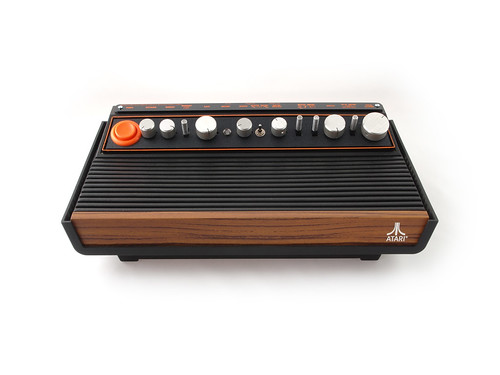
I'm a visual artist and outsider engineer from Brighton, England. My work is inspired by vintage technology. You might have seen my Atari Punk Console VCS Tribute Edition or my aluminium and copper space invaders on the Internet.

I'm taking a three month sabbatical in the Fall to study electronics at The Analog Lab in NYC. I'm looking for accommodation with good access to lower Manhattan from early September until the end of November hardcoded@me.com.

Monday, 2 July 2012

MXR Blue Box clone

MXR Blue Box clone(Click photo for Flickr album)

Custom build of a MXR Blue Box clone. This early 1970s octave fuzz pedal is based on some pretty basic engineering causing it's pitch tracking circuitry to glitch at higher frequencies and jump wildly between octaves. Lots of unpredictable fun. Octave pedals repeat the incoming guitar signal an octave above or below. Hendrix loved them and Jack White wouldn't leave home without one.

The motif on the copper-etched fascia is from some graffiti found on the side of a truck in San Diego, California.

MXR Blue Box clone Check back soon for audio demos!

Sola Sound Tone Bender clone

Sola Sound Tone Bender clone(Click photo for Flickr album)

Custom build of a Sola Sound Tone Bender clone using original germanium transistors for authentic vintage filth. This early British fuzz pedal was taken up by many mid-sixties players including that world-changing triumvirate of Englishmen, Clapton, Beck and Page. Check back soon for audio demos!

Sunday, 6 May 2012

This Is Obsolete with The Brighton Five Pound Fringe presents two collections of original artwork by Jim Harris at The Rock Inn, Kemptown.


From 5th May to 28th May 2012 This Is Obsolete with The Brighton Five Pound Fringe presents two collections of original artwork by Jim Harris at The Rock Inn, Kemptown.

Take a look at all the work featured in the exhibition here on Flickr

Dirty Circuits (2011) is a series of etched copper-plates, back-lit etched copper-clad sheets and limited edition prints. The collection is inspired by the printed circuit boards of classic vintage synthesisers.

In the dark and dusty interiors of the music machines of an abandoned era we discover a compelling world etched in copper. Hidden beneath ageing components, the paths and patterns of these forgotten circuits evoke systems that extend beyond the merely electronic towards the mechanical, the architectural and even the organic.

Sprites (2012) previews a forthcoming collection of etched copper-plates with aluminium and brass inserts depicting classic video game characters.

A sprite is a reserved area of computer memory storing a transient representation of an animation or image. By casting this data in physical materials this flux of chaos is fixed (Head and Paraskos, 2008). Planned work in the collection will explore a wider palette of colours and textures through the colouring, patination and bronzing of metals allowing for the creation of more detailed characters from Mario and Luigi to Frak!

Jim Harris is an artist and outsider engineer living in Brighton on the south coast of England. His original artwork and unique devices are inspired by vintage technology and aim to celebrate the abandoned, the derelict and the obsolete. More of Jim's work can be seen at thisisobsolete.com. Items from both collections can be purchased from Folksy.com.

The artwork is printed on metal in etch-resistant ink using a transfer process requiring heat and pressure. The copper-plates, copper-clad epoxy laminate sheets and brass parts are etched in sodium persulphate whilst the aluminium parts are etched in ferric chloride. The prints are pulled from the copper-plates using a hand press. Black ink on dyed grabado printing paper is used.

An electroluminescent panel contains a thin layer of copper coated in phosphor which glows when an alternating current is applied to it. Powder phosphor-based electroluminescent panels are frequently used for backlighting. They provide a gentle, even illumination while consuming relatively little electric power. The panels in this exhibition were generously supplied by Elwirecraft.co.uk and can be battery or mains powered.

The Brighton Five Pound Fringe is an exciting, new kind of arts festival that is affordable to audiences and free to participants. Britain's first "brochure-less" fringe, it is run entirely through social media. Ticketed events cost no more than a fiver. The Brighton Five Pound Fringe runs from 5th May to 28th May alongside the world famous Brighton Fringe and Brighton Arts festivals.

Sprites (2012) - Preview


Sprites (2012) previews a forthcoming collection of etched copper-plates with aluminium and brass inserts depicting classic video game characters.

A sprite is a reserved area of computer memory storing a transient representation of an animation or image. By casting this data in physical materials this flux of chaos is fixed (Head and Paraskos, 2008).

Planned work in the collection will explore a wider palette of colours and textures through the colouring, patination and bronzing of metals allowing for the creation of more detailed characters from Mario and Luigi to Frak!

The collection is currently being exhibited at The Rock Inn, Kemptown as part of The Brighton Five Pound Fringe. More details here.

Take a look at the collection here on Flickr

Atari Punk Console - VCS Tribute Edition featured on RetroThing.com


James Grahame has kindly featured my Atari Punk Console - VCS Tribute Edition on his awesome blog RetroThing.com. If you don't know the blog and you love vintage gadgets and technology then I highly recommend a visit. There's more dirty circuits, obsolete gizmos and wilful retrospection than you can shake a light pen at!

Friday, 6 April 2012

Manual Shift Register

Manual Shift Register(Click photo for Flickr album)

A shift register is a type of integrated circuit used in digital electronics to manipulate information within an electronic system. Shift registers can be found in a diverse range of equipment from washing machines to smartphones.

The Texas Instruments 74HC595 is one such device. It is an 8-bit serial-in, parallel-out shift register – a single input controls eight simultaneous outputs.

The speed at which a 74HC595 operates is controlled by a timer or clock. In a typical application it will execute millions of instructions per second.

The work presented here is a 74HC595 with it's clock and other functions replaced by manual controls. Without intervention the 74HC595 will not operate. Manual Shift Register challenges the orthodoxy of automation in electronic systems. It represents the antithesis of autocorrect - the momentum of the circuit is subjugated to the will of the operator.

A video demonstrating the work follows. Various manual controls determine the input and operation of the device and it's internal state and output are shown using LEDs and a 7-segment display.


Manual Shift Register represents a study towards a larger piece of work applying similar themes and techniques to the construction of an electronic musical instrument. The 29 registers of a MOS Technology 6581 SID chip will be exposed to direct operation using an analogous array of physical controls.

The 6581 is a hybrid digital/analog 3-voice electronic music synthesiser manufactured on a single semiconductor die. It was designed by Bob Yannes for Commodore and used in several of their home computers during the 1980s including the Commodore 64. It's unique sound – so called chiptune or chip music – has become popular with both mainstream and independent artists.